Showing posts with label intensive farming practices. Show all posts

9 Ways to assist Australia's farmers with climate change

"Global warming affects agriculture in a number of ways, including through changes in average temperatures, rainfall, and climate extremes (e.g., heat waves); changes in pests and diseases; changes in atmospheric carbon dioxide and ground-level ozone concentrations; changes in the nutritional quality of some foods; and ..."

Climate change and agriculture - Wikipedia


.....................................
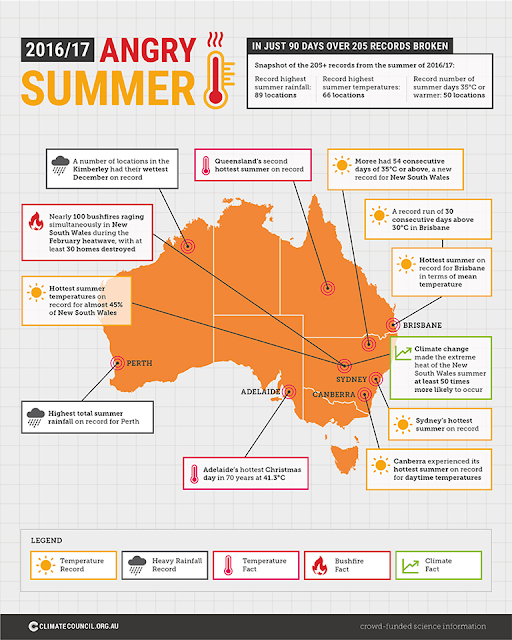

Climaste Council meme
Angry Summer by The Climate Council


It is obvious that many farmers are going to be displaced because of climate change. As their usual crops become unviable and broad scale farming becomes uneconomical because of costs, it is impossible to continue to subsidise farmers that continue to farm or to graze unsuitable animals in an unsustainable fashion. Yet farmers need government support and Australia requires food production.


#jailclimatecriminals, #farmingpractices, #climatecrisis
Australia must learn to manage with less surface water. Artesian water resources must be husbanded.

Suggested Actions

1. “What we still don’t have in the year 2019 is a national (Australian) strategy on climate change in agriculture. There’s still no actual framework to help farmers manage these risks and implement solutions,” she said. Verity Morgan-Schmidt, the chief executive of Farmers for Climate Action

2. Revitalise, with extra funding, our agricultural support services that have provided excellent research and development in the past, new crops and animal husbandry practices can be developed.

3. Provide education for farmers that demonstrate alternative farming practices, for example move from cattle to goats.

4. Only subsidise farmers that change their practice to accommodate a changing climate and protect our soils but retrain farmers unable to accommodate change.

5. Encourage small farming practices such as permaculture, greenhouse production, urban farms.

Note: Intensive farming practices have been shown to be as productive as industrial broad scale farming.

6.  Stop selling water off or subsidising in any way corporations that persist in growing water hungry crops such as cotton and almonds in water scarce areas.

7.  Protect our surface and artesian water from destructive and unsustainable industries.

8.  Support farmers to plan moves from floodplains or cope with more flooding. 


#jailclimatecriminals, #cambioclimatico
Droughts will occur more often. Soils will erode. Desertification will occur.


9.  Encourage farmers to 'get a yield' with new products.

" 'Agritourism, insect farming off waste resources, bush tucker foods — there are options out there, but it's not traditional agriculture in that sense.'

" 'We need support structures, new ideas, people helping us transition to these other production industries. ' "

She (Anika) believes the first step needs to come from the energy sector to buy more time for other industries to develop response strategies.

'The easiest way to put the brakes on what we are experiencing is to transition away from dirty fossil fuel energy to clean, renewable energy; that then takes the pressure off other industries.' "


An article by Preparations for Climate Change

See also:  Preparing for a Climate Change Health Crisis

Prepare for likely food shortages

Action: Increase the budgets of our Departments of Agriculture

#hunger

Extreme weather = extreme hunger

Climate change is one of the biggest threats to ending global hunger. 

Weather patterns are getting more extreme and unreliable, and it’s playing havoc with food production. As our planet heats up, the forecast is more hunger.

Big polluters are causing climate change to worsen. They’re putting our food, water and health at risk and making huge profits at the expense of poor communities.

The coal industry is one of the worst offenders."
OXFAM


Farming Innovations


"Climate change is altering conditions that sustain food production, with cascading consequences for food security and global economies. Recent research evaluated the simultaneous impacts of climate change on agriculture and marine fisheries globally. 

Climate change will affect flowering and fruiting.

Modelling of those impacts under a business-as-usual carbon emission scenario suggested about 90% of the world’s population – most of whom live in the least developed countries – will experience reductions in food production this century.
Implications for agriculture are manifold. For example, many temperate crops require cool autumn or winter temperatures to initiate flowering or fruit ripening. Orchards may need to be relocated further south, or novel low-chill varieties may need to be bred, as is already happening around the world.


Read more: Climate explained: regenerative farming can help grow food with less impact


Insect pests and diseases are normally controlled by our low winter temperatures, but they may become more of a problem in the future. Introduced pests and diseases include fruit flies that have a major impact in Australia and other more tropical countries, but struggle to establish breeding colonies in New Zealand. Strong biosecurity controls are our best bet for reducing this risk.

What matters more than the gradual increase in temperature predicted by climate change models, is the greater frequency of extreme weather events. These include droughts, floods and hail, which can lead to total crop losses in particular regions.
Adaptation of farming methods will be key


As a recent report by the UN Food and Agriculture Organisation (FAO) explains, rising temperatures, rising seas and the increasing frequency of adverse weather events will interact to reduce agricultural and horticultural productivity in many regions around the world. https://theconversation.com/climate-explained-how-climate-change-will-affect-food-production-and-security-128106

Poorer countries will suffer most from hunger


"Growing solutions to the climate crisis


The July IPCC report cited above lists various adaptation and mitigation measures that could help reduce the adverse impacts of food and dietary preferences on climate change. The suggestions address more sustainable food production and diets (more plant-based, less meat-based); improved forestry management (including reducing deforestation and increasing reforestation); agricultural carbon sequestration, including no-till farming practices; and reducing food waste.


And it warns that delaying action will be costly:


Deferral of [greenhouse gas] emissions reductions from all sectors implies trade-offs including irreversible loss in land ecosystem functions and services required for food, health, habitable settlements and production, leading to increasingly significant economic impacts on many countries in many regions of the world."
https://skepticalscience.com/guide-climate-change-food-impacts.html


Part contents of IPCC report


"So, what can individuals do to help avert some of the worsening impacts of climate on food supply? There in fact are a number of ways to help support climate-friendlier food production. Improving soil health, on a large-scale, is one key way forward. Nutrient-rich soil stores carbon better than degraded, overworked soil. Plus, healthy soil helps farms stay productive – a win-win. 
Consumers can boost these efforts, by supporting farmers and ranchers who engage in sustainable practices like cover cropping and composting.

We waste a third of the food produced

Reducing meat consumption is another way to reduce the climate impact of food production, given that a livestock farm is like a methane factory, contributing an estimated 14.5 percent of global greenhouse gas emissions. Meatless Mondays, “flexitarian” diets, and the rise of faux-meat brands are all testimony to the growing efforts aimed at reducing meat consumption.
In addition to consumer actions, there are interesting new ways forward on the industry side. Manure digesters, for one, can convert methane from manure into electricity. And seaweed is gaining scientific interest for its potential in making cattle burp less often. (Yes, you read that right.)
Policy efforts will likely be key also. California for its part has goals to direct some cap-and-trade funding to build compost facilities, and incentivize methane reduction in dairies.
The challenges ahead are steep. But so too are the opportunities to adapt to new realities and reduce assorted diverse impacts. 
According to Project Drawdown, three of the top 10 best climate solutions have something to do with food, from reducing food waste (3) and choosing a plant-rich diet (4) to silvopasturing (9), which integrates trees and pasture into a single ecosystem."
http://www.ipsnews.net/2019/09/a-brief-guide-to-the-impacts-of-climate-change-on-food-production/


"There are things we can and must do in the hope of adaptation- there is no research that adaptation will help. ​​They start with best agricultural practices, which applies to all regions. The best practice for both food production and addressing climate change is organic agriculture and best form of that regarding climate change is agro-forestry. Much progress has been made in methods like no-till agriculture and more efficient irrigation. Permaculture can be an important source of food production in urban and country settings." http://www.climatechange-foodsecurity.org/solutions.html


Cities and climate change


"Given the serious threats to food security, attention should shift to an action-oriented research agenda, where we see four key challenges: (a) changing the culture of research; (b) deriving stakeholder-driven portfolios of options for farmers, communities and countries; (c) ensuring that adaptation actions are relevant to those most vulnerable to climate change; (d) combining adaptation and mitigation." https://www.sciencedirect.com/science/article/pii/S2211912415300262


Remove subsidies for planet harming crops


More at this Excellent Reference: https://www.climatecouncil.org.au/resourcesfoodsecurityreport2015/
Related: Prepare for Economic Chaos
External related link: theguardian: lab-grown-food-destroy-farming-save-planet
 

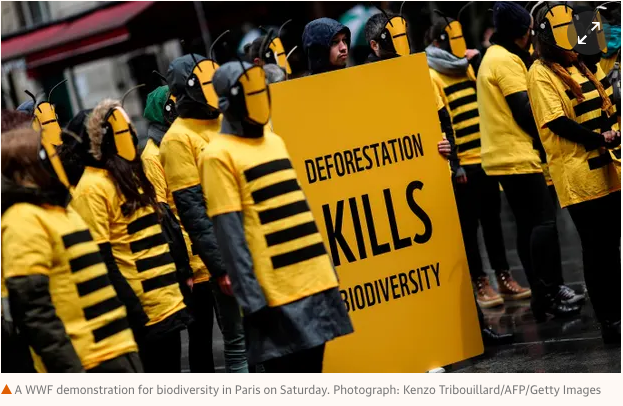
Protecting biodiversity during climate crisis

"We cannot solve the threats of human-induced climate change and loss of biodiversity in isolation. We either solve both or we solve neither."

"Despite the profound threat of biodiversity loss, it is climate change that has long been considered the most pressing environmental concern. That changed this week in Paris, when representatives from 130 nations approved the most comprehensive assessment of global biodiversity ever undertaken."

"The report, spearheaded by the Intergovernmental Science-Policy Platform on Biodiversity and Ecosystem Services (IPBES), found that nature is being eroded at rates unprecedented in human history.
One million species are currently threatened with extinction and we are undermining the entire natural infrastructure on which our modern world depends."
https://www.theguardian.com/commentisfree/2019/may/06/biodiversity-climate-change-mass-extinctions


In Australia:

"Impacts of climate change on biodiversity


Climate change is predicted to be the greatest long-term threat to biodiversity in many regions and is listed as a key threatening process in state and Commonwealth legislation. 

Projections of future changes in climate in NSW include increasing temperatures and temperature extremes, increasingly severe droughts, rising sea levels, possible decreasing rainfall, regional flooding and reduced water availability in the Murray-Darling Basin.

Australia has experienced cycles of climate change in the past, but the current changes are more serious due to the rate of change in atmospheric greenhouse gas levels and temperatures, and because ecosystems are already stressed by other human impacts.

The most vulnerable ecosystems include coastal ecosystems, alpine areas, rainforests, fragmented terrestrial ecosystems and areas vulnerable to fire or low freshwater availability.

Species that could become endangered or extinct include those living near the upper limit of their temperature range (for example, in alpine regions); those with restricted climatic niches; and those that cannot migrate to new habitats due to habitat fragmentation or lack of alternatives.

Helping biodiversity adapt

Addressing the impacts of climate change on biodiversity will require a long-term effort and new ways of thinking. To help species and ecosystems cope with climate change, OEH developed Priorities for Biodiversity Adaptation to Climate Change (PDF 1MB).

These priorities focus on 4 key areas:

  1. Enhancing our understanding of the likely responses of biodiversity to climate change and re-adjusting management programs where necessary
  2. Protecting a diverse range of habitats through building a comprehensive, adequate and representative public reserve system in NSW, with a focus on under-represented bioregions
  3. Increasing opportunities for species to move across the landscape by working with partners and the community to protect habitat and create the necessary connections across landscapes
  4. Assessing adaptation options for ecosystems most at risk from climate change in NSW
The document draws on the NSW Climate Impact Profile which has assessed the likely impacts of climate change on species and ecosystems in NSW."

https://www.environment.nsw.gov.au/topics/animals-and-plants/biodiversity/about-biodiversity/climate-change-impacts 


“There is no question we are losing biodiversity at a truly unsustainable rate that will affect human wellbeing both for current and future generations,” he said. “We are in trouble if we don’t act, but there are a range of actions that can be taken to protect nature and meet human goals for health and development

"The goal is to persuade an audience beyond the usual green NGOs and government departments. “We need to appeal not just to environment ministers, but to those in charge of agriculture, transport and energy because they are the ones responsible for the drivers of biodiversity loss,” he said.

A focus will be to move away from protection of individual species and areas, and to look at systemic drivers of change, including consumption and trade."

Robert Watson, the chair of the Intergovernmental Science-Policy Platform on Biodiversity and Ecosystem Services (IPBES).
https://www.theguardian.com/environment/2019/may/03/climate-crisis-is-about-to-put-humanity-at-risk-un-scientists-warn 


"It requires massive changes, from removing subsidies that lead to the destruction of nature and future warming of the Earth, to enacting laws that encourage the protection of nature; from reducing our growing addiction to fossil-fuel energy and natural resource consumption, to rethinking the definition of a rewarding life."

We need to redirect government subsidies towards more sustainable and regenerative farming.

This will not only contribute towards absorbing carbon and reducing the emissions of other greenhouse gases, it can also halt a frightening trajectory where farmland is so overloaded that eventually it just stops growing crops."


 Up to 30% of koalas on New South Wales mid-north coast may have been killed and many more may be endangered in South Australia in the country’s ongoing bushfire crisis after experts warned fires are the biggest threat Australian wildlife faces.


https://www.theguardian.com/environment/2019/sep/16/1m-a-minute-the-farming-subsidies-destroying-the-world