Showing posts with label Australia. Show all posts

Prepare Australia's transport now for climate change or face costly transport chaos

"As the transport systems in our major cities come under pressure, some commuters and communities are experiencing negative effects such as high transport costs and travel times, congestion, overcrowding, noise, air pollution, and reduced physical activity.


Crucially, our transport systems are failing when it comes to tackling climate change."

Waiting for the Green Light: Transport Solutions to Climate Change 13.09.18 By , and

Click here to download the full report.


"AUSTRALIA is stuck in the slow lane on transport pollution, as one of a handful of OECD countries without greenhouse gas emissions standards for vehicles.

Our new report, ‘Waiting for the Green Light: Transport Solutions to Climate Change’ shows that transport is Australia’s second largest source of greenhouse gas pollution, after electricity."


 "Transport is now Australia’s second largest source of greenhouse gas pollution after electricity, and the sector has seen the largest percentage growth (62.9%) since 1990."

 
Click to enlarge


"At a number of international conferences, transport ministers have addressed the need for CO2 abatement and improved fuel efficiency in the transport sector, mainly through:
  1. Innovative vehicle technologies, advanced engine management systems and efficient vehicle powertrains;


Olli, a 3D-printed autonomous bus that’s looking to revolutionize transit.
Local Motors

  1. The use of sustainable biofuels, not only of the first generation (vegetable oil, biodiesel, bio-alcohols and biogas from sugar plants, crops or animal fats etc.), but also of the second (biofuels from biomass, non-food crops including wood) and third generations (biodegradable fuels from algae);

  2. An improved transport infrastructure together with Intelligent Transport Systems (ITS) to avoid traffic congestion and to foster the use of intermodal transport (road, rail and waterways);
    See related UNECE work


Reference

  1. Consumer information (campaigns for eco-driving*, use of public transport and modal transport etc.);
    See related UNECE work and joined UNECE/WHO work on THE PEP

  2. Legal instruments (such as tax incentives for low carbon products and processes, taxation of CO2 intensive products and processes, etc.).
    See related UNECE work


In Australia a "A variety of factors, including relatively low fuel prices and patterns of urban development, have led to heavy dependence on road transport. Given the significant contribution that road transport makes to greenhouse gas emissions, measures are needed to encourage road transport users to switch to less carbon-intensive modes"


Maddocks:  Climate Change and the Transport Sector


AIR


In the meantime, there are a number of measures that the aviation sector can adopt to mitigate emissions, including: 


• more fuel efficient aircraft, such as through advanced propulsion systems, utilization of lightweight materials, and improved aerodynamics and air frame designs 

• use of lower carbon fuels navigation systems and air traffic control techniques that minimise fuel use


Maddocks:  Climate Change and the Transport Sector


SEA


Maddocks:  Climate Change and the Transport Sector

GENERAL

"In conjunction with a review of the regulatory regimes, consideration needs to be given to how climate change can be more effectively accounted for to reduce the risks for transport infrastructure. 

 Some options include: * mandatory assessments of climate change risks by infrastructure owners and operators review of the standards for transport infrastructure development to ensure that the infrastructure can withstand the effects of climate change – now and in the future 


* the imposition of a use-based tax to support additional maintenance and repair measures that may be needed to address the effects of climate change establishing a direct link between revenues collected from road users and the allocation of funding for infrastructure construction and maintenance to ensure adequate funding exists to address the effects of climate change. 

With respect to mitigation, there are a range of mitigation measures aimed at reducing greenhouse gas emissions from the transport sector, including mode-specific measures as well as more general actions regarding design of transport and transport usage.  Most of the mode-specific mitigation measures relate to road transport. 

Uptake of these measures, particularly the voluntary measures, may be limited until a carbon price is introduced. In the meantime, greater emphasis is needed on making transit-oriented design the norm and changing individual’s habits regarding their transportation choices. Improving less carbon-intensive transport choices – particularly, rail transport – will help to achieve this. 

Broader consideration also needs to be given to mitigation options for the other modes, particular air and shipping transport. However, adoption of measures for these modes may be delayed until global responses have been developed."

Maddocks:  Climate Change and the Transport Sector


“The issue goes two ways in transport. Typically, road and air transport are considered major contributors to climate change, making up 23 percent of CO2 emissions,” said Professor Levinson.

“But transport is also vulnerable, particularly due to so many facilities like roads and bus terminals being in flood zones, for instance New Jersey Transit lost $US120 million in damage to buses after Hurricane Sandy.
 
Flooded Tunnel

“Many transport facilities are also below grade, tunnels like those in the New York Subway were severely damaged from flooding during Sandy. Airports being at low elevations along the coast are at risk of sea-level rise. Extreme heat can cause road buckling, freeze-thaw cycles cause pavement cracking and potholes. 
 
Bridges will require strengthening


Dr Mark's map depicts projected landfall hazard in 2050. Blue is water, green is safe (low risk), yellow is medium risk, red is high risk.


“Extreme weather increases the variability of weather, and roads designed for a particular climate range may fail more quickly. All of these add costs to design and retrofit, as well as decreasing reliability for users.”"  University of Sydney Study


Prepare your home for climate change

WARNING: Some of the Australian Government data quoted in 2013 such as the amount of predicted temperature increase and sea level rise appear to be quite conservative estimates that are probably now outdated. Many scientists now predict much higher levels of sea rise. 

For example NASA predicts: Sea Level Will Rise 1-4 feet by 2100


All material below from The Australian Government's site  'Adapting to climate change'  

Adapting to climate change


"Adaptive strategies for building design

Adaptive strategies should be considered for these climate change variables:
  • temperature increase and heatwaves
  • bushfires
  • cyclones and extreme wind
  • severe thunderstorms and high intensity rainfall events
  • flooding
  • sea level rise and storm surge
  • low rainfall."


"A home provides its occupants with a refuge from the climate, but as the climate changes, the home may not be able to meet this need. In general, temperatures are increasing, sea levels are rising and extremes in the weather are more likely. If climate change is considered when a home is being designed or altered, it is likely to remain comfortable for longer, possibly for its whole life.

Although it is important to minimise the extent of climate change through mitigation measures such as reducing greenhouse gas emissions, the opportunity to avoid the impacts of climate change altogether has passed (DCCEE 2010). If we want to ensure that our homes remain ‘as safe as houses’ we need to consider and adapt to the future climate.

In Australia the average life of a brick home is 88 years and a timber home is 58 years (Snow and Prasad 2011); many last much longer than this. Decisions that are made about homes today will therefore continue to have consequences for many decades.


Photo: Karen Disney

Many old homes are loved and used still.

Australia, because of its size, has a range of climates which will vary in their response to climate change. In general there will be:

  • higher temperatures
  • higher annual rainfall in the north, lower rainfall in the south
  • longer periods of drought
  • increased number of days of very high, extreme or catastrophic fire danger
  • increased risk and intensity of severe weather such as tropical cyclones, floods, hailstorms and droughts.


Photo: Robyn McLean
The home was built to withstand the extremes of the Top End tropical climate.

Adequate insurance will help to protect you financially against extreme events. To ensure that it meets needs, you should:

  • know the specific impacts relevant to your region
  • review your current insurance
  • consider seeking professional advice.
You already consider the future when acquiring, building or just living in a home: for example, how livable will it be, will it accommodate a growing family, is it affordable, and is it likely to increase in value. You should also ask what the climate will be like and whether the home will suit these conditions. Take into account your objectives, how long the home is intended to last and any regulatory requirements.
 
Photo: Simon Wood Photography
Fixed awnings have been fitted on west and east facing windows to provide extra shading.


Climate change

Noting that the impacts of climate change will vary from region to region the best estimates are that by 2030 Australia will face:

  • about 1°C of warming, resulting in more heatwaves (CSIRO and BOM 2007; Australian Academy of Science 2010)
  • up to 20% more months of drought (CSIRO and BOM 2007)
  • up to 25% increase in days of very high or extreme fire danger (CSIRO and BOM 2007)
  • increases in storm surges and severe weather events (CSIRO and BOM 2007; Australian Academy of Science 2010)
  • a sea level rise of about 15cm (Australian Academy of Science 2010).
If emissions continue unabated the impacts are likely to be more severe in the future (Australia Academy of Science 2010).
Research the likely climate change impacts for your location and base your decisions upon your findings. There are many sources of information about climate change, including your local council, who may also be able to provide information about planning controls that could guide home design.


Photo: Simon Wood Photography


One central source is www.climatechangeinaustralia.gov.au. For further information about impacts at a state or territory level, see relevant government websites.

Adaptive strategies for building design

Adaptive strategies should be considered for these climate change variables:

  • temperature increase and heatwaves
  • bushfires
  • cyclones and extreme wind
  • severe thunderstorms and high intensity rainfall events
  • flooding
  • sea level rise and storm surge
  • low rainfall.
Many of the options outlined below are from Snow and Prasad (2011). Seek advice from a professional, e.g. an architect or designer, before making changes to the design or redesign of your home.


Bushfires

A significant increase of very high, extreme or catastrophic fire danger days is expected. Minimising fuel loads — things that burn — close to the home will reduce the risk (Gibbons et al. 2012). Keep yard growth trimmed, clear dead wood and rubbish often and use metal rather than wood for fences.

There are several architectural ways to minimise the risk of the home burning and/or maximise the safety of the occupant:

Photo: Rollashi


  • Install shutters and sprinkler systems in high risk zones.
  • Ensure that the roof minimises the risk that burning embers will be caught.
  • Use building materials that are fire resistant.
  •  

Cyclones and extreme wind

Although the total number of cyclones is expected to decrease, high wind events and tropical cyclones of greater intensity may increase; their range could also move further south (CSIRO and BOM 2007).
Extremely strong winds can place a great strain on buildings; any damage to homes can cause subsequent damage to their contents. 

To minimise the risks:

  • use improved fixing systems in the roof structure and the subfloor (increasing the strength in one area may cause another area to fail: consult a professional)
  • design buildings to minimise the wind loads
  • use impact resistant materials for external cladding
  • ensure building materials are largely waterproof and drainage design is effective, particularly for flashing, vents and penetrations.
In an established home, ensure the structural fixing elements have not been compromised by corrosion or previous cyclones (Snow and Prasad 2011).


Severe thunderstorms and high intensity rainfall events

An increase in high intensity rainfall events has been projected but it is difficult to predict whether thunderstorms — hail, wind and tornados — will increase in number and/or intensity. Indications are that hailstorms will increase over the south-east coast of Australia, potentially leading to impact damage and moisture penetration.
Given the significant damage that hailstones can inflict it may be worthwhile preparing homes for the impacts. Options for reducing damage include:

  • selecting roof materials that are impact resistant (e.g. metal rather than terracotta)
  • designing or installing appropriate window protection.


Consider ‘the four Ds’ when managing water flow about the home to reduce damage from high intensity rainfall: deflection (keep it out), drainage (get it out if it gets in), drying (allow wet materials to dry) and durability (select materials that can withstand the effects) (Walford 2001). Options include:

  • designing or installing window protection
  • ensuring roofs are well maintained
  • creating greater capacity to detain and harvest water from a deluge
  • selecting materials that can withstand moisture
  • ensuring there are drainage cavities in walls
  • improving the detailing to roof edges, open decks, walls and joinery, retaining walls, floors, balconies, wall−roof junctions and roofs.
  • ensuring internal and box guttering can withstand a 1-in-100 year rainfall event.


Capturing the extra rain and using it to irrigate green spaces may also offer advantages, such as reducing heat island effects (built-up areas become hotter than nearby rural areas).


Floods


The projected increase in rainfall intensity is likely to result in more flooding events. Flooding can be localised or associated with a river system. Possible impacts include water damage to the home and its contents, the undermining of foundations and the contamination of the home by sewage or mud (Snow and Prasad 2011).
The risk of flooding to homes can be reduced by not building in areas which could flood, i.e. along river floodplains and on low-lying coastal areas. Other options to reduce flooding risk include:

  • exceeding minimum floor levels
  • constructing multistorey homes and using the lower level for non-living areas
  • using water resistant materials (e.g. concrete, fibre cement)
  • ensuring that drainage allows water to escape after the flood
  • raising vulnerable equipment (e.g. service meters)
  • building a limited life dwelling to minimise financial outlay
  • building a levee around the house
  • designing a garden that will safely redirect water.
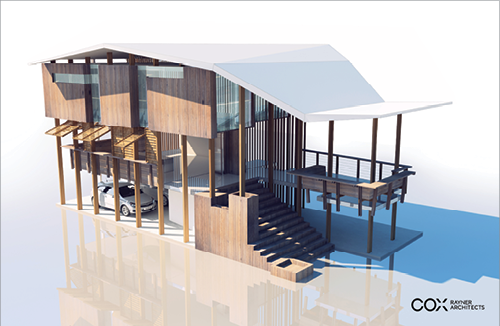
Raising floor level heights may not only reduce the risk of flooding but could also have beneficial effects on passive thermal design (e.g. by increasing subfloor circulation to cool the house). However, using fill to increase the height of the floor may disturb acid sulphate soils so make sure you have a sound knowledge of the site (see Choosing a site).


An architect’s conceptual illustration of a modern home on stilts.

Source: © Cox Rayner Architects
Design of a home that could cope with flood conditions.


Sea level rise and storm surge


Although the coastline of Australia has changed throughout time it has been fairly stable for the last 6,000−7,000 years (DCCEE 2009). More recently, between 1950 and 2000, global sea levels have been rising by an average of 1.8mm per year, a rate that has increased to over 3mm since the mid-1990s (this rate varies significantly around Australia) (CSIRO and BOM 2007). With 85% of the Australian population living in coastal regions, susceptibility to both sea level rise and storm surge is concerning (Snow and Prasad 2011).


Storm surges occur when intense onshore winds push waves harder against the coast, and have the most impact during high tides. Other factors that increase the impact of storms are wind strength and direction and coastal characteristics (CSIRO and BOM 2007).
As a result homes near coastlines and estuaries may thus be more likely to flood and may have to cope with rising watertables. 

Greater foreshore erosion could also expose more homes to the impacts of storm surges and sea level rise (particularly for sandy coasts). Stormwater systems may be less able drain into the sea and therefore may cause flooding further inland (Camilleri 2000).


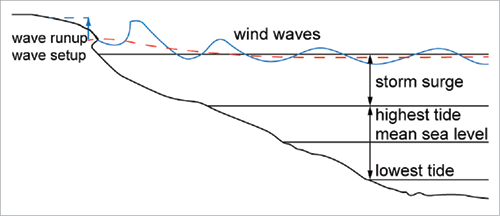
 A line drawing of a cross-section of a beach and the ocean. The lip of the beach is the wave runup and the wave setup. The different heights of seawater are, from top to bottom, wind waves, storm surge, highest tide, mean sea level and lowest tide.
Source: CSIRO and BOM 2007

Characteristics of tide, waves and storm surge combined.

Three strategies can deal with sea level rise and storm surge: protect (e.g. construct sea walls), accommodate (live with the impact) and retreat (DCCEE 2009; Snow and Prasad 2011).

Options for accommodating the risk or retreating include:

  • elevating the home
  • ensuring the parts of the home that may flood can cope (e.g. the foundations)
  • building a limited life home to minimise financial outlay
  • building a transportable home.
For further information about the vulnerability of the coastline of Australia see Climate change risks to Australia’s coast: a first pass national assessment (DCCEE 2009) or consult local government risk assessments.


Low rainfall


In areas where rainfall will decline, droughts will be more severe. Flows into water supply catchments will decrease and evaporation of water and transpiration from trees increase due to higher temperatures (CSIRO and BOM 2007).


Photo: G. Smith


Minimising water use and maximising water efficiency and capture are essential for ensuring there is enough water to maintain lifestyles (see Water).

Author

Author: Department of Climate Change and Energy Efficiency, 2013


Protecting biodiversity during climate crisis

"We cannot solve the threats of human-induced climate change and loss of biodiversity in isolation. We either solve both or we solve neither."

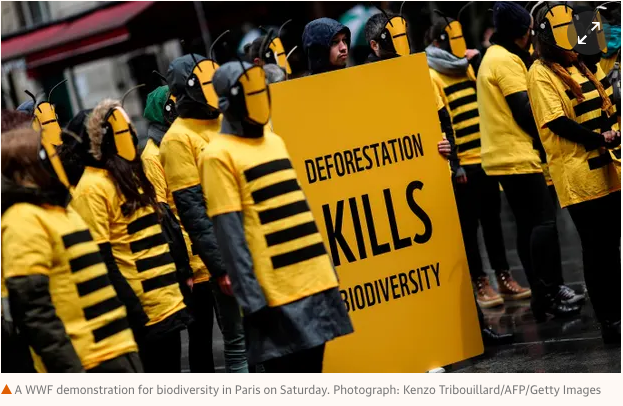
"Despite the profound threat of biodiversity loss, it is climate change that has long been considered the most pressing environmental concern. That changed this week in Paris, when representatives from 130 nations approved the most comprehensive assessment of global biodiversity ever undertaken."

"The report, spearheaded by the Intergovernmental Science-Policy Platform on Biodiversity and Ecosystem Services (IPBES), found that nature is being eroded at rates unprecedented in human history.
One million species are currently threatened with extinction and we are undermining the entire natural infrastructure on which our modern world depends."
https://www.theguardian.com/commentisfree/2019/may/06/biodiversity-climate-change-mass-extinctions


In Australia:

"Impacts of climate change on biodiversity


Climate change is predicted to be the greatest long-term threat to biodiversity in many regions and is listed as a key threatening process in state and Commonwealth legislation. 

Projections of future changes in climate in NSW include increasing temperatures and temperature extremes, increasingly severe droughts, rising sea levels, possible decreasing rainfall, regional flooding and reduced water availability in the Murray-Darling Basin.

Australia has experienced cycles of climate change in the past, but the current changes are more serious due to the rate of change in atmospheric greenhouse gas levels and temperatures, and because ecosystems are already stressed by other human impacts.

The most vulnerable ecosystems include coastal ecosystems, alpine areas, rainforests, fragmented terrestrial ecosystems and areas vulnerable to fire or low freshwater availability.

Species that could become endangered or extinct include those living near the upper limit of their temperature range (for example, in alpine regions); those with restricted climatic niches; and those that cannot migrate to new habitats due to habitat fragmentation or lack of alternatives.

Helping biodiversity adapt

Addressing the impacts of climate change on biodiversity will require a long-term effort and new ways of thinking. To help species and ecosystems cope with climate change, OEH developed Priorities for Biodiversity Adaptation to Climate Change (PDF 1MB).

These priorities focus on 4 key areas:

  1. Enhancing our understanding of the likely responses of biodiversity to climate change and re-adjusting management programs where necessary
  2. Protecting a diverse range of habitats through building a comprehensive, adequate and representative public reserve system in NSW, with a focus on under-represented bioregions
  3. Increasing opportunities for species to move across the landscape by working with partners and the community to protect habitat and create the necessary connections across landscapes
  4. Assessing adaptation options for ecosystems most at risk from climate change in NSW
The document draws on the NSW Climate Impact Profile which has assessed the likely impacts of climate change on species and ecosystems in NSW."

https://www.environment.nsw.gov.au/topics/animals-and-plants/biodiversity/about-biodiversity/climate-change-impacts 


“There is no question we are losing biodiversity at a truly unsustainable rate that will affect human wellbeing both for current and future generations,” he said. “We are in trouble if we don’t act, but there are a range of actions that can be taken to protect nature and meet human goals for health and development

"The goal is to persuade an audience beyond the usual green NGOs and government departments. “We need to appeal not just to environment ministers, but to those in charge of agriculture, transport and energy because they are the ones responsible for the drivers of biodiversity loss,” he said.

A focus will be to move away from protection of individual species and areas, and to look at systemic drivers of change, including consumption and trade."

Robert Watson, the chair of the Intergovernmental Science-Policy Platform on Biodiversity and Ecosystem Services (IPBES).
https://www.theguardian.com/environment/2019/may/03/climate-crisis-is-about-to-put-humanity-at-risk-un-scientists-warn 


"It requires massive changes, from removing subsidies that lead to the destruction of nature and future warming of the Earth, to enacting laws that encourage the protection of nature; from reducing our growing addiction to fossil-fuel energy and natural resource consumption, to rethinking the definition of a rewarding life."

We need to redirect government subsidies towards more sustainable and regenerative farming.

This will not only contribute towards absorbing carbon and reducing the emissions of other greenhouse gases, it can also halt a frightening trajectory where farmland is so overloaded that eventually it just stops growing crops."


 Up to 30% of koalas on New South Wales mid-north coast may have been killed and many more may be endangered in South Australia in the country’s ongoing bushfire crisis after experts warned fires are the biggest threat Australian wildlife faces.


https://www.theguardian.com/environment/2019/sep/16/1m-a-minute-the-farming-subsidies-destroying-the-world