Showing posts with label food security. Show all posts

Climate change: a survivors' guide: The Guardian

As warnings of global climate change grow ever more dire, John Vidal offers 10 tips on how to prepare for an apocalyptic future 
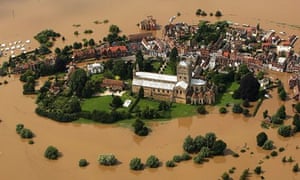
flood in Tewkesbury
Extremes of heat and rainfall are likely to make natural disasters commonplace in the future. Photograph: Daniel Berehulak/Getty Images

1 Stay cool, dry

Britain is expected to get more extremes of heat and rainfall, so prepare for more severe floods, longer droughts and more powerful storms. No one knows quite what the effect over time will be of a slowing Gulf stream, or the melting of arctic sea ice, but climate scientists confidently expect temperatures to rise up to 4C by 2100. That could mean big shifts in rainfall patterns and a more unpredictable climate. So clear your drains, fix your roof and move to Wales – or at least to somewhere with good water supply. The worst that could happen? Your grandchildren will inherit inexorably rising temperatures that render much of the Earth uninhabitable. Their problem? Yes, but yours, too.

Climate change is deadlier than the Coronavirus: CAA

 Food
Climate variability and extreme weather events are among the most important factors that have led to the recent increase in world hunger and are one of the main causes of serious food crises. After a decade of steady reduction, hunger is on the rise again: more than 820 million people were hungry in 2018.

...................................................

"Health: 

more deaths and illnesses driven by climate change
People’s health and health systems are paying an increasingly high price because of extreme heat conditions.

In 2019, high temperatures in Australia, India, Japan and Europe broke all records and adversely affected the health and well-being of the population. In Japan, an intense heat wave resulted in more than 100 deaths and 18,000 additional hospital admissions. In France, more than 20,000 visits to the emergency department for heat-related illnesses were recorded between June and mid-September, and during two major heat waves there were 1462 deaths in the affected regions.

In addition, changes in climatic conditions that have occurred since 1950 facilitate the transmission of the dengue virus by Aedes mosquitoes and increase the risk of contracting the disease. The global incidence of dengue fever has increased dramatically in recent decades, and the risk of infection affects approximately half of the world’s population."

Prepare for more threats to authentic democracy

As the climate crisis worsens and conflict increases over scarce resources expect more threats to authentic democracy.


In The Maldives

President Abdulla Yameen of the Maldives. AFP/Getty


"According to a 2017 study published in The Lancet, extreme weather could displace up to a billion people around the world by the middle of the twenty-first century—an unprecedented human migration will undoubtedly influence the politics of wealthy countries, pushing them to the right.

The best way to counteract this phenomenon is naturally to halt, or at least slow, the effects of climate change. So far, the Paris agreement is the only tangible result of those efforts, and its fate is far from certain .............  But this might change, if the problems caused by climate change—not just stronger hurricanes, droughts, and rising seas, but political rupture—keep washing up on the disappearing shorelines of wealthy governments."

Go to The New Republic article


Around the world


"In its 5th Assessment Report (2014), the Intergovernmental Panel on Climate Change (IPCC) unequivocally confirmed that climate change is real and that human-made greenhouse gas emissions are its primary cause. The report identified the increasing frequency of extreme weather events and natural disasters, rising sea-levels, floods, heat waves, droughts, desertification, water shortages, and the spread of tropical and vector-borne diseases as some of the adverse impacts of climate change. These phenomena directly and indirectly threaten the full and effective enjoyment of a range of human rights by people throughout the world, including the rights to life, water and sanitation, food, health, housing, self-determination, culture and development."

Go to the ohchr.org story


In Australia


"Scott Morrison (Australia's Prime Minister) has signalled a crackdown on “selfish, indulgent and apocalyptic” environmental activists."
Go to The New Daily story 


"It takes some chutzpah to stand up with a straight face and deliver a speech foreshadowing a government crackdown on protest activity while in the same breath declaring that a new insidious form of progressivism is intent on denying the liberties of Australians."

Go to The Guardian story


Our democratic freedoms are under threat in Australia and around the world.


Australian Federal Police raid the ABC offices

"Source confidentiality is one of journalists’ most central ethical principles. It is recognised by the United Nations and is vital to a functioning democracy and free, independent, robust and effective media. 

Go to The Conversation article


"If the major parties and politicians want to rebuild trust with voters, they will need to change the way they do politics: stop misusing their entitlements, strengthen political donations laws, tighten regulation of lobbyists, and slow the revolving door between political offices and lobbying positions."

Let's safeguard our democratic institutions such as free speech, restrictions on overwhelming amounts of corporate donations to political parties, freedom to protest, freedom to privacy, freedom to gather.
 

In the USA

Go to The Atlantic article: David Goldman / AP


"As heat, disaster risks, and rising seas bombard local governments, the ability of those governments to fulfill their basic functions—the delivery of services, the maintenance of the safety net, and managing civil, familial, and educational institutions—could be degraded, too. This could manifest in three distinct phenomena that are already on display in disaster-affected areas: the increased dominance of private and developer-class interests in local politics, the acceleration of existing wealth inequality, and the collapse of institutions dedicated to disaster response."

Go to The Atlantic article


Prominent media corporations are supporting climate deniers, fossil fuel dependent corporations and corporations whose profits depend on degrading the human environment.

Let's care for our vulnerable. 

Lets support action plans (see below) to tackle climate change.
Go to World Bank document


Preparing to prevent more war and conflict caused by climate change


"Heatwaves, floods and rising temperatures have led to armed conflict in ethnically divided countries, according to new academic research."
http://priceofoil.org/2016/07/26/climate-change-can-cause-conflict/http://priceofoil.org/2016/07/26/climate-change-can-cause-conflict/
 
"Intensifying climate change will increase the future risk of violent armed conflict within countries, according to a study published today in the journal Nature. Synthesizing views across experts, the study estimates climate has influenced between 3% and 20% of armed conflict risk over the last century and that the influence will likely increase dramatically."


"Climate change-driven extreme weather and related disasters can damage economies, lower farming and livestock production and intensify inequality among social groups. These factors, when combined with other drivers of conflict, may increase risks of violence."


"Planning ahead

Reducing conflict risk and preparing for a changing climate can be a win–win approach. The study explains that adaptation strategies, such as crop insurance, post-harvest storage, training services and other measures, can increase food security and diversify economic opportunities, thereby reducing potential climate–conflict linkages. 

Peacekeeping, conflict mediation and post-conflict aid operations could incorporate climate into their risk reduction strategies by looking at ways climatic hazards may exacerbate violent conflict in the future.

https://www.climatechangenews.com/2014/03/06/us-military-says-climate-change-could-increase-wars-conflict/

More Research is Required

"However, the researchers make clear there is a need to increase understanding of these strategies’ effectiveness and potential for adverse side effects. For example, food export bans following crop failures can increase instability elsewhere.

“Understanding the multifaceted ways that climate may interact with known drivers of conflict is really critical for putting investments in the right place,“ Mach said."

https://news.stanford.edu/2019/06/12/climate-change-cause-armed-conflict/ 


https://www.independent.co.uk/environment/climate-change-wars-global-warming-conflict-refugees-walls-wont-help-general-warns-a7381031
  
' “If we want to solve [these problems] with narrow nationalistic instincts, we will be adding more problems, not solving them.” '
https://www.independent.co.uk/environment/climate-change-wars-global-warming-conflict-refugees-walls-wont-help-general-warns-a7381031


Prepare for likely food shortages

Action: Increase the budgets of our Departments of Agriculture

#hunger

Extreme weather = extreme hunger

Climate change is one of the biggest threats to ending global hunger. 

Weather patterns are getting more extreme and unreliable, and it’s playing havoc with food production. As our planet heats up, the forecast is more hunger.

Big polluters are causing climate change to worsen. They’re putting our food, water and health at risk and making huge profits at the expense of poor communities.

The coal industry is one of the worst offenders."
OXFAM


Farming Innovations


"Climate change is altering conditions that sustain food production, with cascading consequences for food security and global economies. Recent research evaluated the simultaneous impacts of climate change on agriculture and marine fisheries globally. 

Climate change will affect flowering and fruiting.

Modelling of those impacts under a business-as-usual carbon emission scenario suggested about 90% of the world’s population – most of whom live in the least developed countries – will experience reductions in food production this century.
Implications for agriculture are manifold. For example, many temperate crops require cool autumn or winter temperatures to initiate flowering or fruit ripening. Orchards may need to be relocated further south, or novel low-chill varieties may need to be bred, as is already happening around the world.


Read more: Climate explained: regenerative farming can help grow food with less impact


Insect pests and diseases are normally controlled by our low winter temperatures, but they may become more of a problem in the future. Introduced pests and diseases include fruit flies that have a major impact in Australia and other more tropical countries, but struggle to establish breeding colonies in New Zealand. Strong biosecurity controls are our best bet for reducing this risk.

What matters more than the gradual increase in temperature predicted by climate change models, is the greater frequency of extreme weather events. These include droughts, floods and hail, which can lead to total crop losses in particular regions.
Adaptation of farming methods will be key


As a recent report by the UN Food and Agriculture Organisation (FAO) explains, rising temperatures, rising seas and the increasing frequency of adverse weather events will interact to reduce agricultural and horticultural productivity in many regions around the world. https://theconversation.com/climate-explained-how-climate-change-will-affect-food-production-and-security-128106

Poorer countries will suffer most from hunger


"Growing solutions to the climate crisis


The July IPCC report cited above lists various adaptation and mitigation measures that could help reduce the adverse impacts of food and dietary preferences on climate change. The suggestions address more sustainable food production and diets (more plant-based, less meat-based); improved forestry management (including reducing deforestation and increasing reforestation); agricultural carbon sequestration, including no-till farming practices; and reducing food waste.


And it warns that delaying action will be costly:


Deferral of [greenhouse gas] emissions reductions from all sectors implies trade-offs including irreversible loss in land ecosystem functions and services required for food, health, habitable settlements and production, leading to increasingly significant economic impacts on many countries in many regions of the world."
https://skepticalscience.com/guide-climate-change-food-impacts.html


Part contents of IPCC report


"So, what can individuals do to help avert some of the worsening impacts of climate on food supply? There in fact are a number of ways to help support climate-friendlier food production. Improving soil health, on a large-scale, is one key way forward. Nutrient-rich soil stores carbon better than degraded, overworked soil. Plus, healthy soil helps farms stay productive – a win-win. 
Consumers can boost these efforts, by supporting farmers and ranchers who engage in sustainable practices like cover cropping and composting.

We waste a third of the food produced

Reducing meat consumption is another way to reduce the climate impact of food production, given that a livestock farm is like a methane factory, contributing an estimated 14.5 percent of global greenhouse gas emissions. Meatless Mondays, “flexitarian” diets, and the rise of faux-meat brands are all testimony to the growing efforts aimed at reducing meat consumption.
In addition to consumer actions, there are interesting new ways forward on the industry side. Manure digesters, for one, can convert methane from manure into electricity. And seaweed is gaining scientific interest for its potential in making cattle burp less often. (Yes, you read that right.)
Policy efforts will likely be key also. California for its part has goals to direct some cap-and-trade funding to build compost facilities, and incentivize methane reduction in dairies.
The challenges ahead are steep. But so too are the opportunities to adapt to new realities and reduce assorted diverse impacts. 
According to Project Drawdown, three of the top 10 best climate solutions have something to do with food, from reducing food waste (3) and choosing a plant-rich diet (4) to silvopasturing (9), which integrates trees and pasture into a single ecosystem."
http://www.ipsnews.net/2019/09/a-brief-guide-to-the-impacts-of-climate-change-on-food-production/


"There are things we can and must do in the hope of adaptation- there is no research that adaptation will help. ​​They start with best agricultural practices, which applies to all regions. The best practice for both food production and addressing climate change is organic agriculture and best form of that regarding climate change is agro-forestry. Much progress has been made in methods like no-till agriculture and more efficient irrigation. Permaculture can be an important source of food production in urban and country settings." http://www.climatechange-foodsecurity.org/solutions.html


Cities and climate change


"Given the serious threats to food security, attention should shift to an action-oriented research agenda, where we see four key challenges: (a) changing the culture of research; (b) deriving stakeholder-driven portfolios of options for farmers, communities and countries; (c) ensuring that adaptation actions are relevant to those most vulnerable to climate change; (d) combining adaptation and mitigation." https://www.sciencedirect.com/science/article/pii/S2211912415300262


Remove subsidies for planet harming crops


More at this Excellent Reference: https://www.climatecouncil.org.au/resourcesfoodsecurityreport2015/
Related: Prepare for Economic Chaos
External related link: theguardian: lab-grown-food-destroy-farming-save-planet